

How Do Speed Training Drills Make You Faster in 2026?
Fitness / Aug 21,2026
Quick Takeaways
- Executing targeted Speed Training Drills sharpen sprint mechanics by improving force application and stride efficiency.
- Applying proper work-to-rest ratios ensures the body utilizes optimal energy systems for explosive velocity gains.
- Practicing Wall Drills isolates the acceleration angle and reinforces proper knee drive mechanics.
- Combining Agility and Footwork Drills with reactive stimuli train multi-directional acceleration and spatial control.
- Following a progressive routine prevents overtraining while building foundational power across all athletic levels.
There is nothing quite like the thrilling sensation of exploding past a defender or breaking your personal best sprint time. Speed is the ultimate differentiator in sports, but many athletes struggle because they rely on sheer effort rather than biomechanical efficiency. According to the National Strength and Conditioning Association (NSCA), speed is a direct product of stride length multiplied by stride frequency.
If you feel stuck on a performance plateau, refining your mechanics through targeted Speed Training Drills can help unlock your true potential. In this comprehensive guide, we examine essential drills, biomechanical principles, work-to-rest guidelines, and practical protocols designed to build explosive athleticism.
Essential Speed Training Drills for Upper Body Mechanics
Sprinting requires total body coordination. Upper body drive directly controls lower body tempo and ground force delivery.
Seated Arm Drive Drill
Sit on the ground with legs extended straight out. Maintain an upright torso and pump your arms smoothly at a 90-degree elbow angle. Focus on driving the elbows backward aggressively without letting your shoulders tense up.
Standing Arm Drive Drill
Transition to an athletic stance with one foot slightly behind the other. Drive the rear elbow back while swinging the forward hand toward hip height. This exercise reinforces postural stability while training upper-body power transfer.
Essential Reads: How Can You Improve Your Heavy Bag Technique in 2026?
Wall Drills and Acceleration Positioning
Acceleration requires driving force into the ground at a precise forward lean angle. Wall Drills isolate this posture without requiring a full sprint start.
| Drill Variant | Primary Focus | Key Coaching Cue |
| Single-Exchange Wall Drill | Mechanics & Posture | "Drive knee up, tear foot down." |
| Triple-Exchange Wall Drill | Rapid Foot Turnover | "Punch the ground fast and clean." |
| Falling Start Drill | Acceleration Transition | "Fall forward, sprint naturally." |
Executing Knee Drive Wall Drills
Lean against a wall at a 45-degree angle with hands extended shoulder-width apart. Lift one knee toward your chest while keeping the rear leg fully extended. On command, drive the raised leg down aggressively to strike the ground beneath your hips.
Falling Start Drills for Explosive Drives
Stand tall and lean forward from the ankles until momentum naturally forces a recovery step. Drive out explosively for 10 to 20 yards. This exercise naturally bridges wall training and full-speed sprinting.
Agility and Footwork Drills for Reactive Power
True athletic speed requires changing direction rapidly in response to unpredictable visual or auditory cues.
Pro Agility 5-10-5 Shuttle
Set three cones five yards apart in a straight line. Start in a three-point stance at the center cone, explode 5 yards to the right, cut back 10 yards to the left, and finish across the center line.
Reactive Cone Drills
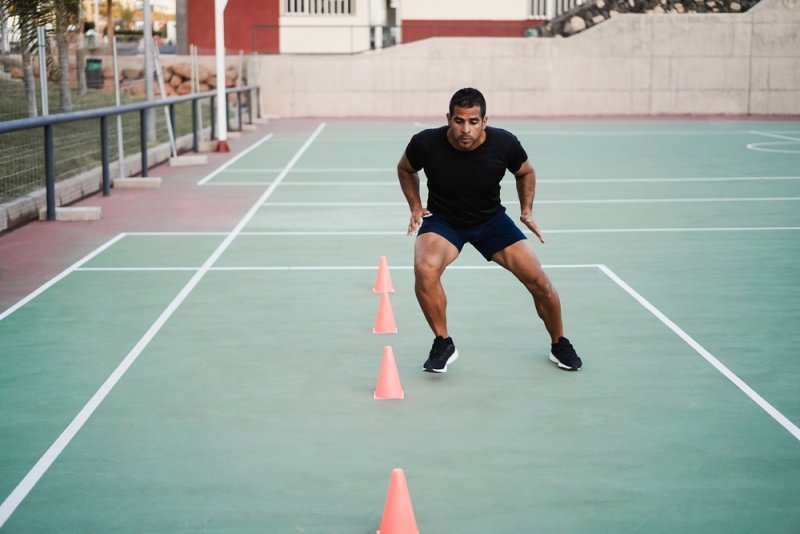
Set up four cones in a diamond shape. Have a partner call out cone numbers or colors at random. Sprint and change direction immediately upon hearing the signal, reinforcing spatial awareness and cutting technique.
Work-to-Rest Ratios and Program Structuring
Training for max velocity requires full recovery between work efforts. Sprinting relies heavily on the phosphagen energy system, which demands strict work-to-rest management.
- Ratio Standard: Utilize a minimum 1:6 work-to-rest ratio during speed development sessions.
- Sprint Distances: Keep repetition distances between 10 and 40 yards to maintain maximum output.
- Rest Periods: Allow 2 to 3 minutes of total rest after high-intensity 5-second sprint efforts.
Must Try: Best Boxer Recovery Methods for Faster Post-Training Results
Conclusion
Mastering functional speed requires consistent mechanical practice and structured progression. Throughout this guide, we explored high-yield arm mechanics, wall posture drills, reactive agility protocols, and precise work-to-rest ratios. Incorporating these drills into your weekly routine sharpens neuromuscular efficiency, builds explosive force production, and minimizes injury risk.
Reaching your full athletic potential demands the right guidance, high-quality training resources, and proven methodologies. When you commit to disciplined practice with elite techniques, you transform your physical capabilities on the field. Take the next step in your athletic journey by accessing expert workouts, performance gear, and training programs at fists.com today.
Frequently Asked Questions
How Often Should Athletes Perform Speed Training Drills Each Week?
Athletes should schedule dedicated speed training sessions two to three times per week. Allowing 48 hours of recovery between workouts gives the central nervous system time to adapt. Performing mechanics drills on well-rested muscles prevents fatigue-induced mechanical errors and lowers overall strain on joints and tendons.
Are Agility Ladders Effective for Improving Top Sprint Speed?
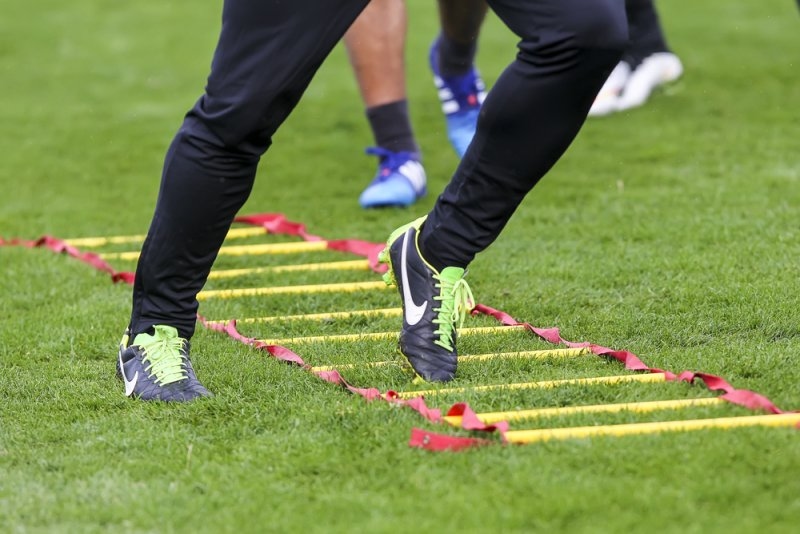
Agility ladders improve coordination, foot speed, and cadence, but they do not increase top-line sprinting speed. High-speed sprinting requires high ground force production. Ladders emphasize quick taps rather than driving force into the ground, making sprint drills and heavy force movements far more effective.
Should Speed Drills Be Performed Before or After Strength Workouts?
Perform speed training drills before heavy lifting sessions. Sprinting requires optimal neural drive, rapid muscle contraction, and crisp biomechanics. Performing speed exercises after heavy lifting introduces fatigue, which degrades technique, reduces maximum velocity, and increases the likelihood of muscle strains.
What Foot Strike Pattern is Ideal During Acceleration Drills?
During acceleration drills, aim for a forefoot strike where the ball of the foot impacts directly underneath the hips. Landing on the forefoot creates optimal lever angles to drive force backward into the ground. Avoid heel striking during sprint phases, as it creates braking forces that reduce speed.
How Long Does it Take to See Results from Speed Drills?
Noticeable improvements in running form, posture, and coordination typically appear within 3 to 4 weeks of consistent training. Measurable gains in 40-yard dash times or top sprint velocity generally require 6 to 8 weeks of structured practice combined with progressive strength work.